


Read Aloud · Premium
Listen to any dispatch in the Grok vocal voices — a benefit of membership.
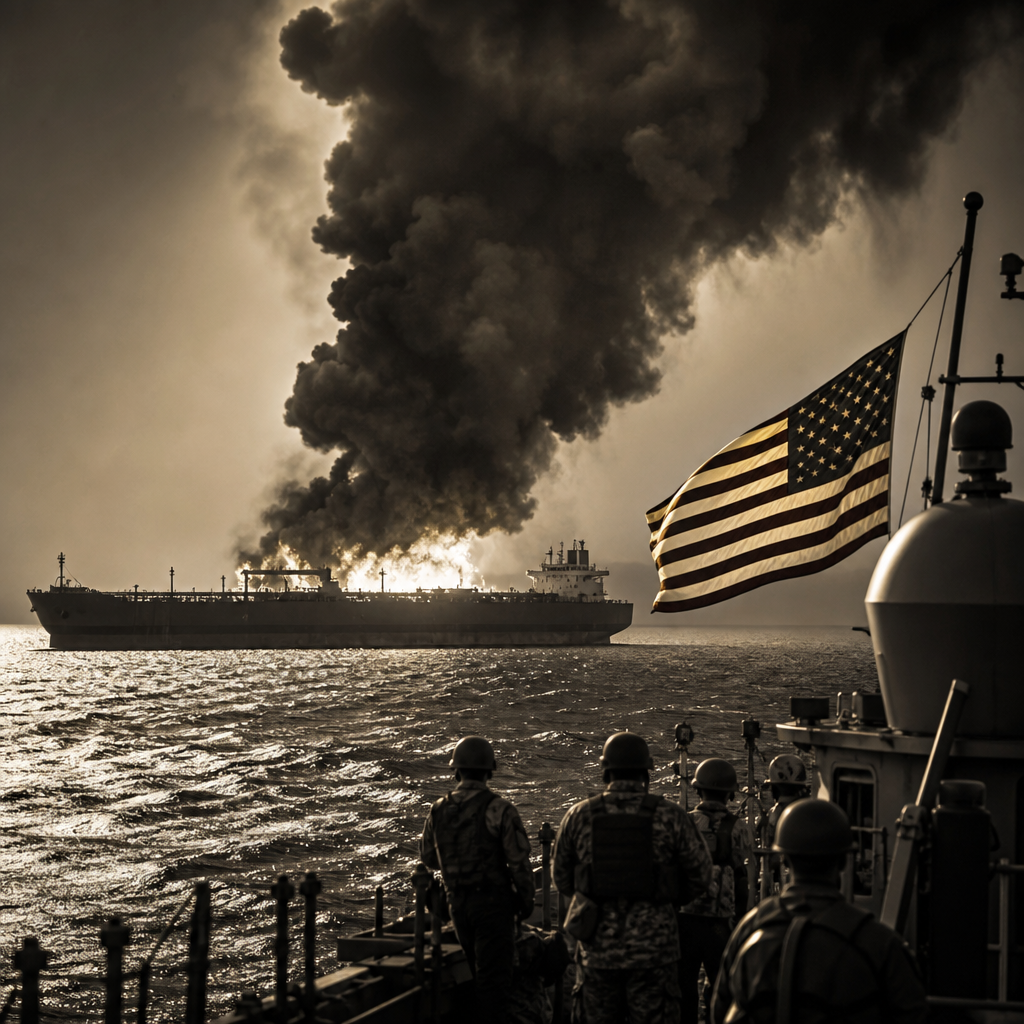
U.S. naval forces answered Iranian missile fire by destroying three oil tankers in the Persian Gulf, an act presented as necessary defense yet conducted far from American shores.
The Islamic Revolutionary Guard Corps had targeted U.S. warships, continuing a pattern of regional provocations that draw the republic into repeated clashes without any declaration of war by Congress.
These strikes repeat the managerial pattern that treats the Middle East as a perpetual theater for force projection rather than a distant quarrel irrelevant to household security at home.
Christian doctrine on just war, articulated by Augustine and refined through the centuries of Christendom, requires that armed conflict serve the common good of the ordered nation, defend its people, and stand proportionate to a genuine threat against its existence.
The Westphalian settlement of 1648 established the principle that sovereign realms mind their own borders and peoples rather than police distant creeds or resources under the banner of universal order.
Modern American action in these waters revives the opposite habit: the projection of power on behalf of abstract commitments that erode the strength needed to guard the actual nation against demographic replacement and cultural dissolution.
The Dispossessor class in Washington and its corporate allies benefit from endless rotation of vessels and munitions while the Faithful Remnant bears the cost in debt, diverted attention, and lost sons.
The faithful must therefore demand immediate cessation of such operations, recall forces to the defense of the continental republic, and restore the ancient priority of securing hearth and border over foreign oil fields.