



Read Aloud · Premium
Listen to any dispatch in the Grok vocal voices. A benefit of membership.
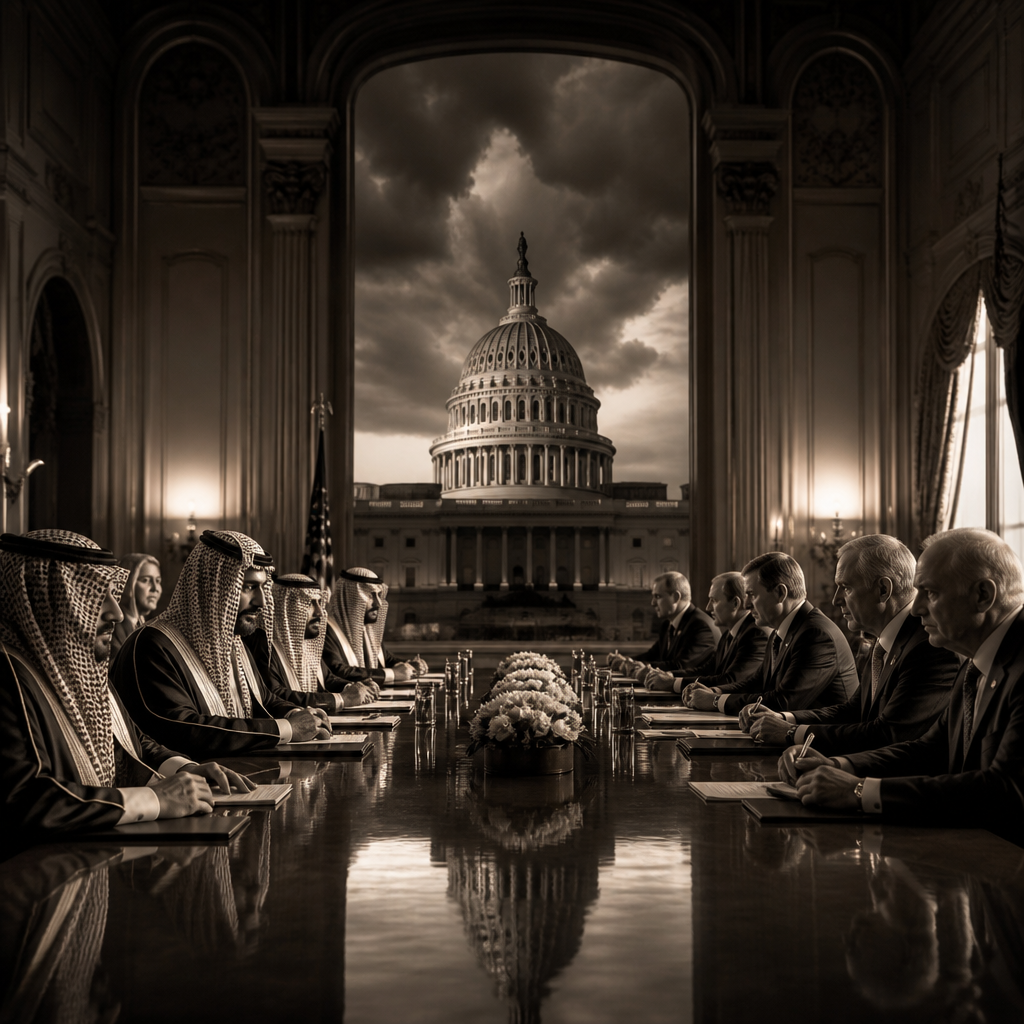
Donald Trump recently demanded that Saudi Arabia recognize Israel before the United States would implement a signed nuclear energy agreement, following earlier remarks that Crown Prince Mohammed bin Salman had been kissing his boots to revive the American economy. Such treatment of a long-standing partner underscores the deeper reality that Washington continues to depend on Riyadh for influence across the Islamic world, oil markets, and regional stability since the close of the Second World War.
The Kingdom serves as Custodian of the Two Holy Mosques and thereby projects American preferences through the Ummah more effectively than direct State Department channels in many cases. Additional leverage arises from Saudi control over energy flows, its role in containing rival powers, and its purchases of American arms that sustain domestic industry. These ties, forged in the postwar order, now bind the United States to an actor whose interests remain distinct from those of the American nation.
Washington's founders warned against precisely this form of entanglement. George Washington's Farewell Address cautioned the young republic against permanent foreign alliances that would subordinate its independent judgment to the calculations of distant courts and kingdoms. The present dependence repeats the same error that later statesmen sought to correct at the Peace of Westphalia, when European powers established the principle that each realm must answer first to its own sovereign duties rather than to external patrons.
Scripture and the creeds alike affirm that legitimate authority flows from God through ordered households and nations, not through supranational bargains struck for temporary advantage. When a Christian commonwealth outsources its reach to a foreign custodian of holy sites, it trades the City of God for the temporary favors of the City of Man.
The United States therefore stands before a clear choice. Continued reliance on Saudi leverage perpetuates the managerial priesthood that treats the American people as instruments of global schemes rather than as a distinct nation under divine law. The faithful remnant must demand that elected leaders restore the historic boundaries of national sovereignty.
That restoration begins with refusing any further preconditions imposed by foreign powers and with rebuilding domestic capacity in energy, diplomacy, and defense. Only then can the republic again govern according to its own covenant obligations instead of the shifting interests of desert allies.