



Read Aloud · Premium
Listen to any dispatch in the Grok vocal voices. A benefit of membership.
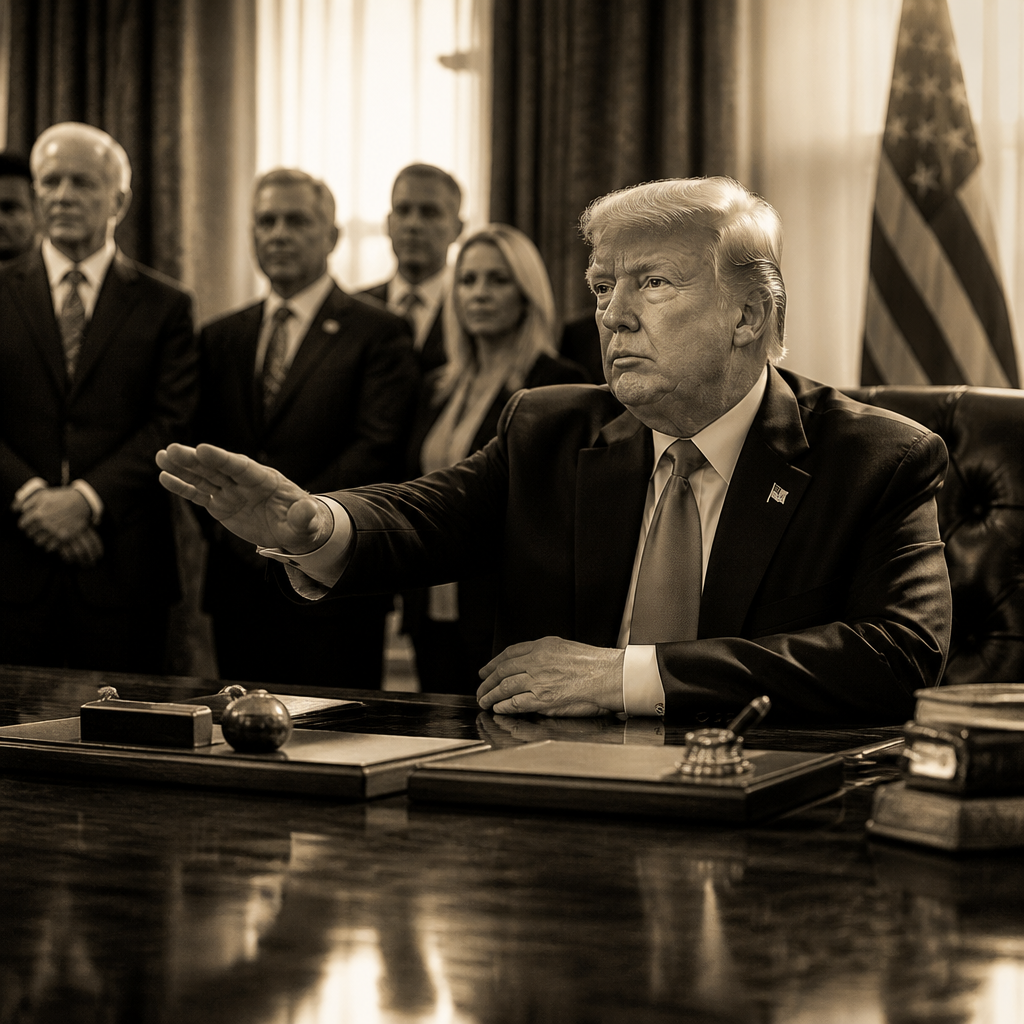
President Trump told CBS News that his deportation policy was too tough and floated legal status for long-settled illegal immigrants. The president who campaigned on mass removals placed sympathy for hotel and landscaping workers ahead of enforcement pledges. No eligibility rules accompanied the suggestion. Homeland Security Secretary Markwayne Mullin quickly declared amnesty off the table. The contradiction leaves the nation exposed to familiar political drift.
The 1986 Immigration Reform and Control Act legalized roughly 2.7 million illegal aliens while promising employer sanctions and verification systems. Enforcement never matched the scale of legalization. Illegal entries resumed and grew. Migrants watch Washington for signs of retreat. The pattern repeats whenever enforcement yields to accommodation.
Trump's remarks entertaining deals for legal status amount to signaling amnesty to migrants. The message travels faster than any later clarification. Households that built lives on illegal presence receive encouragement to remain. New arrivals interpret the words as an opening. Border communities absorb the downstream costs in wages, schools, and cohesion.
Signaling amnesty to migrants therefore invites further illegal immigration. Natural law establishes that every people holds the right to preserve its territory and lineage against uncontrolled entry. Rulers who weaken that perimeter breach their primary duty. The 1986 precedent demonstrates the outcome with precision. Legalization without sustained removal simply multiplies the problem.
The same logic governed earlier European settlements where rulers granted status to foreign laborers. Each concession drew additional cohorts and eroded the original population's majority. Christendom maintained borders through oaths of loyalty and expulsion when necessary. Modern states that abandon these instruments repeat the cycle of demographic replacement. The United States now stands at the same threshold.
Signaling amnesty to migrants invites further illegal immigration because it severs the link between law and consequence. Divine order places the household and nation under patriarchal protection. When leaders substitute sympathy for that protection, they invert the hierarchy of duties. The 1986 statute promised enforcement alongside legalization. The enforcement never arrived, and the illegal population expanded for decades afterward.
Trump's sympathetic language toward workers present for ten or fifteen years mirrors the arguments used in 1986. Those arguments rested on the claim that legalization would close the chapter. The chapter remained open because the political class lacked the will to remove violators. The same absence of will appears in current remarks that treat enforcement as excessive.
Signaling amnesty to migrants invites further illegal immigration by design. Every prior instance shows that migrants respond to perceived openings rather than to later denials. Congress holds the constitutional power to withhold funding and statutory authority for any status program. The body must exercise that power before the next wave organizes around the latest signal.
The opponent claims humanitarian flexibility for settled workers justifies a limited deal. The claim collapses against the documented record of 1986, when identical flexibility produced sustained entries rather than closure. No new eligibility criteria appear in the present remarks to prevent the same result. The signal itself drives the outcome without alteration.
President Trump's remarks entertaining deals for legal status therefore constitute signaling amnesty to migrants. The act invites further illegal immigration by repeating the mechanism that failed after the 1986 reform. Congress must refuse any statutory vehicle that grants legal presence. Committees on immigration can block authorization and appropriations in the present session. The cost is political friction from business lobbies and media pressure, yet the alternative is the continued dissolution of the historic nation.
Households and parishes must press their representatives to treat border integrity as a non-negotiable duty. The precedent of 1986 supplies the evidence that partial legalization expands the problem. Lawful means remain available through legislation and oversight. The horizon is the current Congress. Failure to act ratifies the signal already sent.
Political incentives favor accommodation because business interests seek continued labor flows and media outlets frame enforcement as harsh. These mechanisms reward short-term deals over sustained removal. The 1986 outcome proved that legalization alone cannot substitute for physical control of territory. Rulers who repeat the pattern place electoral calculations above the preservation of the people they govern.
Signaling amnesty to migrants invites further illegal immigration when leaders place sympathy above the patriarchal duty to secure the lineage and soil. Congress alone possesses the institutional levers to halt this drift. It must deploy those levers through immediate refusal of funding and authorization. The historic nation depends on that exercise of authority before demographic pressures become irreversible.