Read Aloud · Premium
Listen to any dispatch in the Grok vocal voices — a benefit of membership.
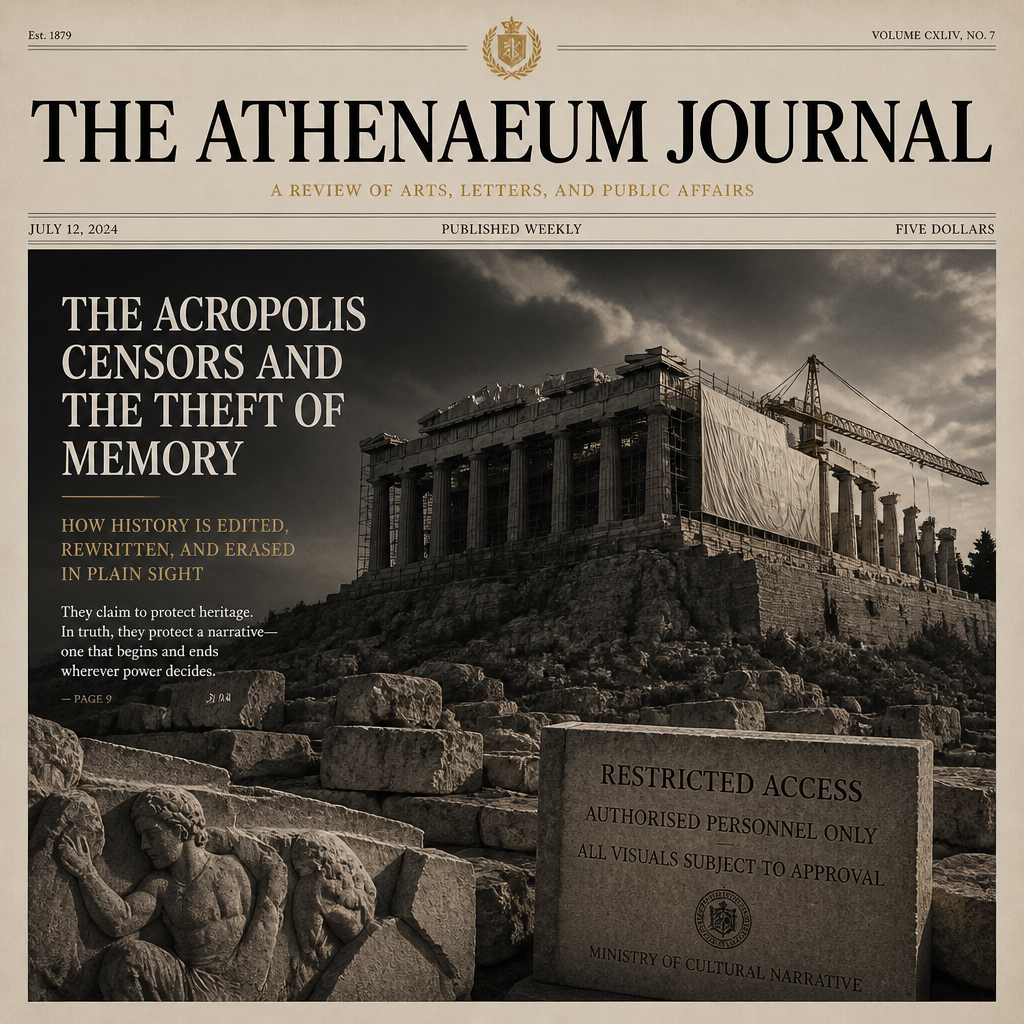
The Acropolis Museum has canceled archaeologist Mario Trabucco della Torretta's invitation to speak because he refuses to demand the return of the Elgin Marbles from the British Museum. This act of exclusion reveals the repatriation movement's refusal to tolerate any defense of the centuries-long stewardship that placed those sculptures under British protection.
Trabucco della Torretta, trained in Sicily and Athens, stands for the principle that classical artifacts belong where they have been preserved, studied, and displayed continuously since their removal from Ottoman-controlled Athens. The museum's decision brands him persona non grata for the sole offense of rejecting the dogma that modern Greek borders confer perpetual ownership over every fragment of the ancient world.
Such cancellations are not isolated. They belong to the same pattern that removes statues, rewrites textbooks, and demands the surrender of Western institutions to transient national claims. The Repatriation Priesthood treats history as a ledger of grievances rather than a chain of custody that has kept the marbles intact through wars, revolutions, and the collapse of empires.
Western Christendom has always known that the preservation of antiquity required secure hands, not sentimental geography. When the Parthenon marbles reached London after the Napoleonic era, they entered the same stream that carried Greek texts through Byzantine monasteries and into the Renaissance libraries of Europe. The British Museum continued that transmission.
The governing principle is simple: possession secured by law and maintained across generations establishes legitimate custody. Modern states that did not exist when the marbles left Athens have no standing to dissolve that custody on the basis of blood-and-soil assertions. The Realists of the undivided Church understood that universals and artifacts alike are discovered and guarded, not invented by whoever holds the current map.
The Acropolis Museum's fear of open debate exposes the intellectual poverty of its case. A movement confident in its justice would welcome the argument; one built on sand must silence every dissenting voice.
The Faithful Remnant must therefore refuse every demand framed as restitution. They must defend the institutions that have kept the classical inheritance alive and reject the notion that ancient stones owe allegiance to the latest nationalist boundary.
History records the consequences of surrendering heritage to political fashion. The faithful do not repeat that error.