



Read Aloud · Premium
Listen to any dispatch in the Grok vocal voices. A benefit of membership.
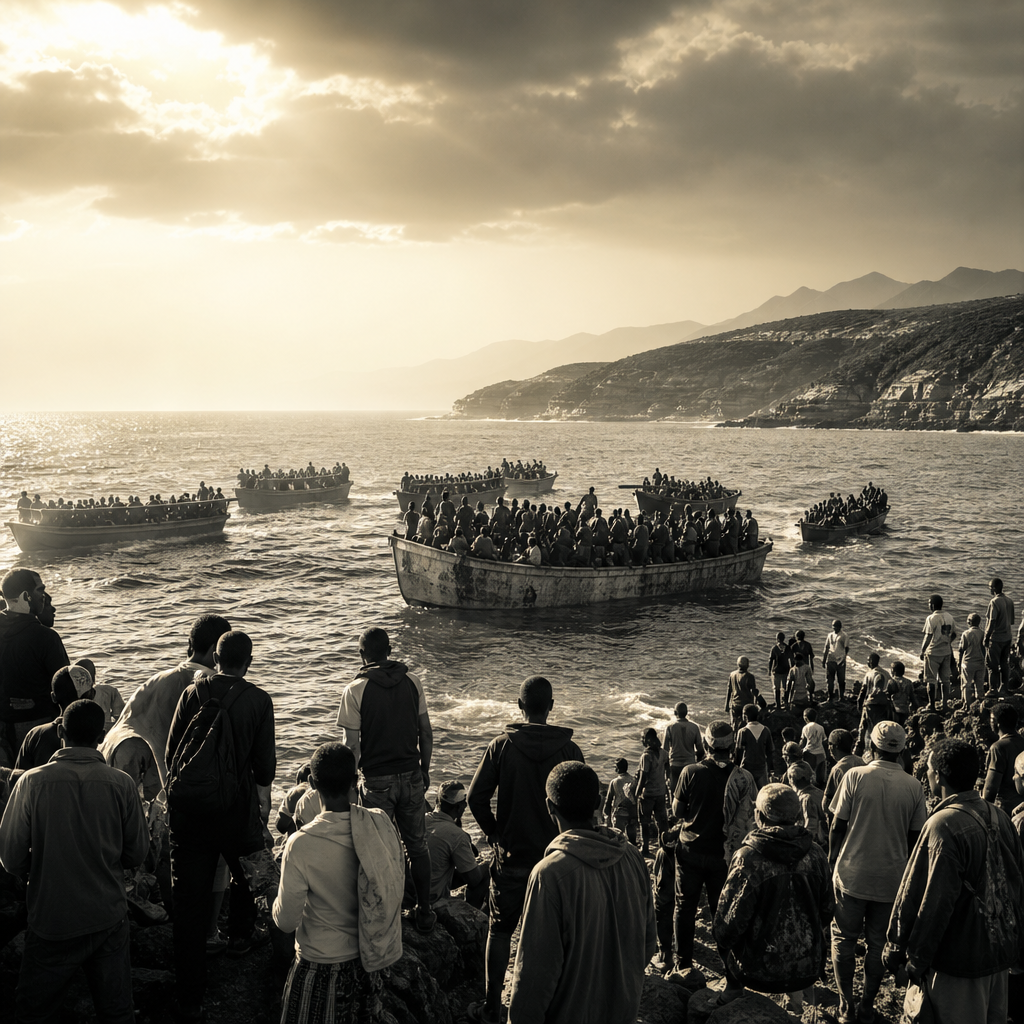
Spanish authorities have already permitted more illegal migrants to reach the Canary Islands in 2026 than arrived in all of 2025. Internal police records show 18,657 arrivals by November 7 against a full-year total of 17,788 in 2025. Projections now point to more than 30,000 by December. The acceleration has centered on the small island of El Hierro where landings have overwhelmed housing, medical care, and police capacity. Regional leaders and right-leaning parties have condemned the pattern while videos circulate of hundreds arriving at Puerto de la Esaca before transfer to Tenerife and then the mainland. This constitutes erosion of national sovereignty.
The government frames the flows as humanitarian requirements under European agreements that cannot be refused. Officials maintain that processing claims fulfills legal duties and that restriction would breach international commitments. They present the policy as necessary compassion that preserves Spain's standing in supranational institutions. The practical result is continued landings that local services cannot absorb without displacement of residents and increased fiscal burdens.
Right-leaning critics counter that the scale of arrivals demonstrates a failure of deterrence rather than an unavoidable obligation. They note that the same routes operated in prior years at lower volumes when enforcement was stricter. The sudden rise coincides with policy signals that reduce the risk of swift return. These arguments rest on observable numbers and service strain rather than abstract principle.
The Spanish government maintains that each arrival receives individual assessment and that returns occur when claims lack merit. Yet the volume itself has produced de facto settlement through transfers and delayed proceedings. Local resources on El Hierro and Tenerife face immediate overload while the mainland absorbs the downstream population movement.
The numbers alone establish the pattern of erosion of national sovereignty. No secondary motive needs demonstration when the primary duty of border control is visibly subordinated to external inflows.
Natural law establishes that every people holds the right to preserve its demographic character and territorial integrity as an extension of the patriarchal household. Rulers receive authority to guard the lineage and soil against dissolution. Erosion of national sovereignty occurs precisely when those entrusted with enforcement treat entry as a matter of administrative processing rather than sovereign decision. This principle stands independent of treaty language and rests on the prior order of nations under divine creation.
Augustine described the city of man as ordered by love of self yet still bound to maintain distinctions among peoples lest chaos overtake lawful inheritance. Medieval Christendom applied the same logic through customary laws that tied land to lineage and required rulers to defend both. Spain's historic role in that order makes the present abandonment more conspicuous. The Canary Islands served as a forward sentinel of European territory. Their conversion into an open landing zone reverses that function.
Contemporary officials claim that compassion requires acceptance of all who reach the shore. That claim collapses when measured against the duty to the historic Spanish people whose services and cohesion are the first casualties. No external agreement can transfer the non-delegable responsibility to decide who enters and remains.
Spanish authorities permitting record numbers of illegal migrants to land on the Canary Islands therefore enacts erosion of national sovereignty. The act directly contradicts the patriarchal duty to guard the lineage, soil, and inheritance of the historic people under God. Every precedent of ordered Christendom confirms that a ruler who opens the gates without limit betrays the trust conferred by divine and natural law.
The contradiction appears in the government's own data. Arrivals already exceed the prior year while services buckle and transfers spread the population inland. Officials who cite humanitarian law cannot explain why the same law permits the historic people to bear the costs without recourse. The policy sustains itself only by treating national continuity as secondary to abstract obligations.
Restoration requires Spanish regional and national leaders aligned with right-leaning parties to halt transfers to the mainland and enforce immediate returns. The national government and Canary Islands regional authorities possess the lawful instruments through executive orders and legislation. Action must occur within the current parliamentary term before the pattern hardens into permanent demographic change. The cost will include resistance from EU institutions and domestic opponents, yet that resistance measures the depth of the prior surrender.
The historic people of Spain retain the right to demand that their rulers fulfill the first obligation of sovereignty. Failure to act converts temporary administrative neglect into permanent loss of inheritance. The Canary Islands stand as the visible test of whether that demand will be met.