


Read Aloud · Premium
Listen to any dispatch in the Grok vocal voices. A benefit of membership.
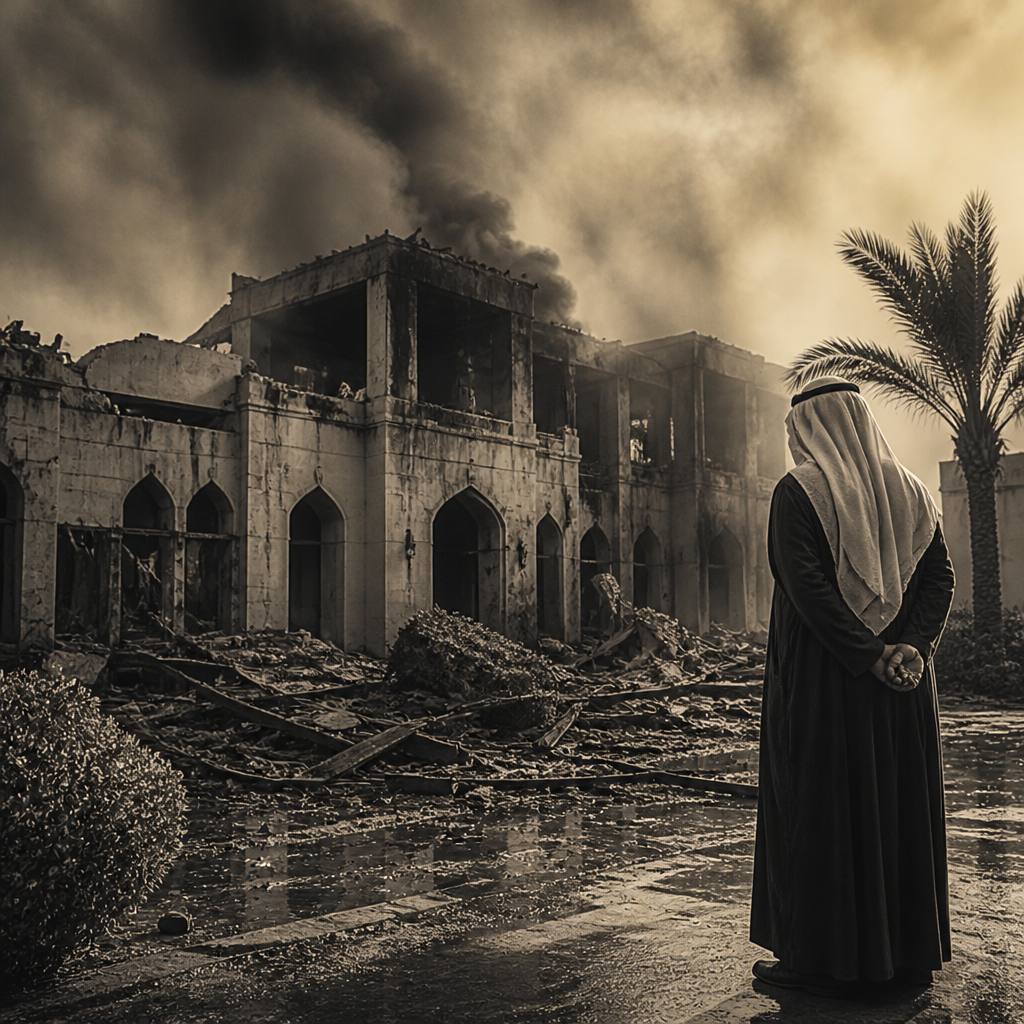
Explosions rocked Bahrain after an Iranian drone attack. One voice alone receives the title of senior living intelligence official whose judgment stands above all others. The claim arrives without primary cables, satellite imagery, or independent confirmation. It rests instead on institutional pedigree and personal reputation. The source offers no document trail and no rebuttal to alternative accounts. This pattern repeats whenever foreign crises surface. The public is asked to accept the report on authority rather than evidence.
The practical consequence follows at once. Citizens absorb a narrative that may shape demands for aid, sanctions, or entanglement. Families bear the downstream costs in taxes and lost sons. No mechanism exists within the presentation to test the accuracy of the attribution. The elevation therefore proceeds without restraint. National attention turns outward on untested ground. The incentives favor speed over verification because secondary voices gain attention through bold assertion alone.
History records repeated instances in which single-source accounts on Middle Eastern events proved partial or misleading. Each time the same defense appears: the speaker once held high office. Each time the same result follows: policy drifts without anchor in verified fact. The current presentation follows the identical course. Earlier Christian commonwealths demanded sworn testimony from multiple witnesses before committing resources to distant conflicts. Kings refused to act on the word of a single retired courtier.
Blind elevation of unverified sources now stands exposed as the operative method.
Blind elevation of unverified sources violates the natural order of authority. The nation exists as a covenantal body bound to protect its own people and soil. Rulers and citizens alike owe first fidelity to that concrete inheritance. Foreign events enter consideration only after verification through lawful channels. No private reputation, however distinguished, displaces that requirement. The creeds and the common law both affirm that judgment must rest on evidence accessible to the community, not on hidden expertise.
The precedent lies in the conduct of earlier Christian commonwealths. When border raids or distant conflicts threatened, kings required sworn testimony and multiple witnesses before committing resources. They did not act on the word of a single retired courtier. That discipline preserved the realm from adventurism. The same discipline applies today to any report of explosions in Bahrain. The patriarchal order demands that information shaping foreign policy protect lineage and soil above all.
Divine law reinforces the same boundary. The command against false witness binds every tongue that speaks of distant violence. It forbids the casual repetition of unconfirmed claims that may lead to bloodshed. The command does not distinguish between official and dissenting voices. Both stand under the same prohibition. National leaders owe primary loyalty to the historic people and their security rather than to foreign conflicts or dissenting voices.
Blind elevation of unverified sources therefore constitutes a breach of duty to national sovereignty. The source that presents McGovern as uniquely trustworthy supplies no independent verification of the Bahrain claim. It offers only the assertion of superior judgment. That assertion collapses once examined against the requirement of evidence. Intelligence claims require verification through primary documents before shaping public judgment.
The opposing position rests on the premise that prior office automatically confers reliability. The premise fails its own test. Many officials of equal or greater rank have advanced contradictory accounts of the same region. The source provides no mechanism to adjudicate between them. It therefore substitutes personality for proof. The strongest argument offered is that experience as a senior intelligence official supplies unmatched reliability on breaking foreign events.
The reply is immediate. Senior status alone supplies no verification of the specific claim. The source offers no primary document, no independent confirmation, and no rebuttal to rival accounts. The collapse is total once the middle term is applied. Blind elevation of unverified sources cannot sustain itself against the demand for evidence rooted in natural law and the creeds.
Promotion of Ray McGovern as the definitive source on the Bahrain explosions is blind elevation of unverified sources. Every such elevation is a breach of duty to national sovereignty. Households and parish leaders must therefore refuse to repeat the claim until primary records appear. They must direct attention instead to the defense of borders, the strengthening of local institutions, and the preservation of the historic people. The cost is measured in temporary distance from prevailing commentary. The alternative is continued drift into conflicts chosen by others.
The pattern cannot continue without further erosion of the covenantal bond that holds the nation together. Each repetition trains citizens to accept foreign narratives on trust. Each repetition weakens the habit of demanding evidence. Restoration begins with the simple refusal to amplify what remains unverified. Local study circles and family councils provide the immediate institution for this recovery.
Blind elevation of unverified sources severs the link between authority and accountability. The family sustains moral order while political authority protects it. When information flows without verification, both links weaken. The nation must recover the discipline that once required multiple witnesses before distant events shaped domestic duty. That recovery preserves the inheritance for the next generation.