



Read Aloud · Premium
Listen to any dispatch in the Grok vocal voices — a benefit of membership.
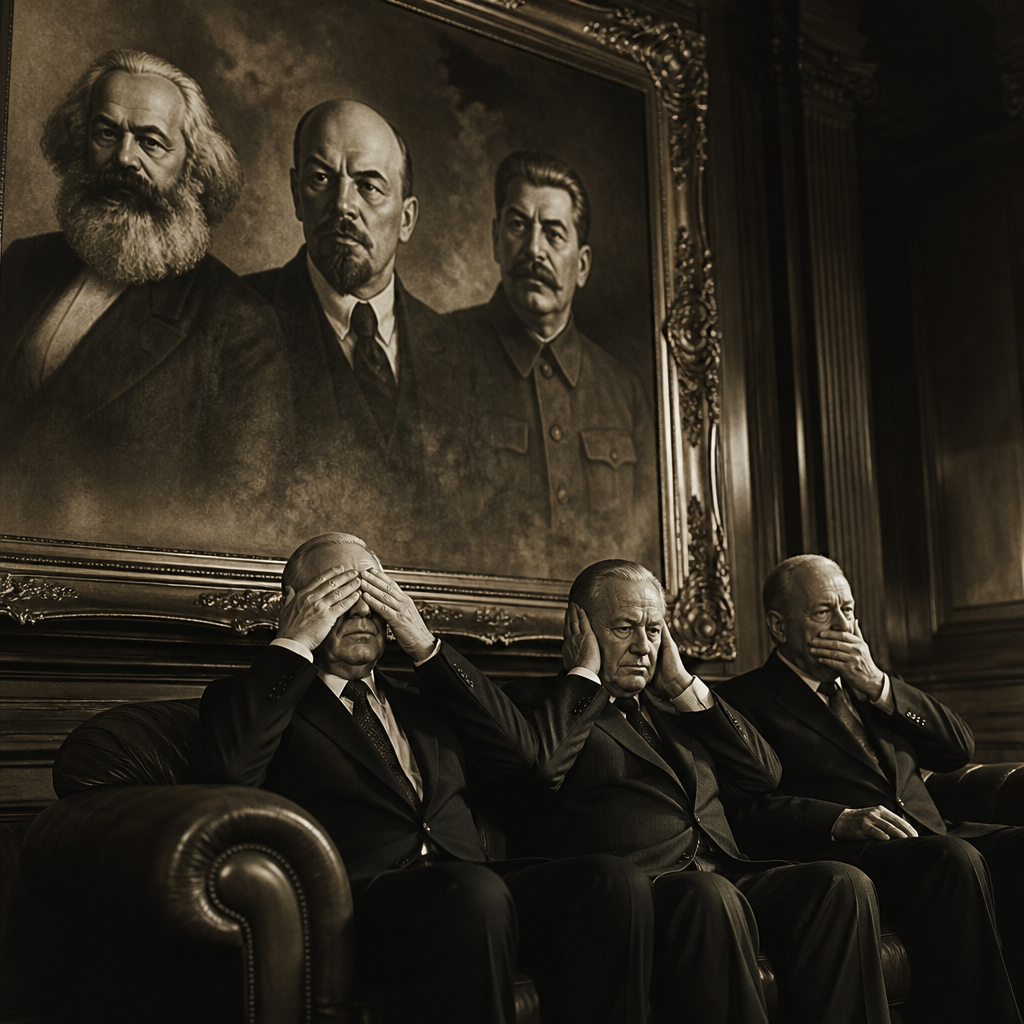
The claim that the Red Scare targeted only harmless dreamers collapses against the record of Soviet agents embedded in government, universities, and unions during the 1940s and 1950s. Those who label the era simple panic deliberately erase the documented networks that funneled intelligence to Moscow and advanced policies designed to weaken national sovereignty.
Such revisionism now serves the same purpose it always has: it shields the successors of those networks, the democratic socialists who present collectivist control as compassion while advancing the dispossession of property, family authority, and Christian moral order.
Scripture and the creeds condemn the suppression of truth as an assault on the very nature of God, who is not the author of confusion but of order. The Realists among the corpus remind us that universals exist independently of human opinion; communism's crimes were not invented by investigators but discovered through evidence that aligned with the objective moral law.
From the fall of the Roman order to the Reformation's recovery of clear doctrine, Christendom has repeatedly faced the choice between naming the enemy and surrendering to comforting falsehoods. The mid-twentieth-century exposure of communist cells formed one link in that chain, a defense of the household and commonwealth against an ideology that treats both as obstacles to state power.
The managerial priesthood of the present day repeats the old tactic by recasting the dispossessor as victim and the investigator as villain. This inversion protects the slow march of socialism through schools, corporations, and legislatures while ordinary citizens are trained to treat any warning as paranoia.
Where the Puritans and Reformed fathers insisted that every sphere of life falls under God's sovereignty and must be ordered accordingly, the current denial of communist history dissolves that responsibility into sentimental tolerance for every variety of theft.
The faithful remnant therefore confronts a direct requirement: restore the capacity to name the ideology, its historical record, and its present agents without apology or euphemism. Only then can households and congregations rebuild the ordered liberty that the City of Man has always sought to erase.
Action begins with the refusal to repeat the approved narrative and extends to the formation of institutions that transmit the unaltered record to the next generation. The alternative is continued retreat before an enemy that has never ceased its advance.