



Read Aloud · Premium
Listen to any dispatch in the Grok vocal voices. A benefit of membership.
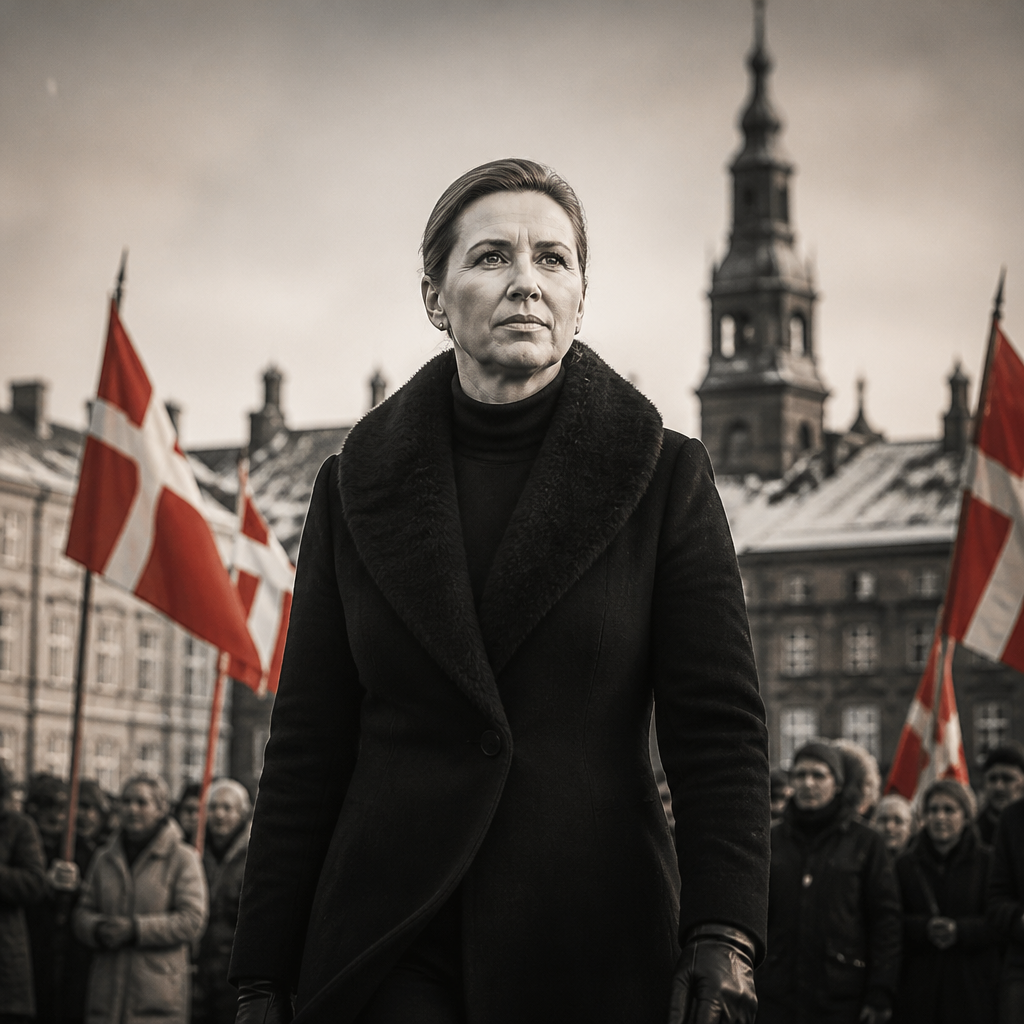
Danish Prime Minister Mette Frederiksen has rejected large-scale population replacement and multiculturalism in favor of a strong majority culture. The declaration places demographic integrity at the center of national policy. She spoke against the dissolution of Denmark's historic character under sustained migration. Her words challenge the prevailing European assumption that nations must dissolve into pluralist experiments. This stance asserts that a people retains the right to remain itself. The position crystallizes around defense of majority culture.
Multicultural advocates answer that diversity strengthens societies and that states must accept replacement to remain modern. They claim open borders prevent stagnation and ethnic conflict. Their position treats inherited identity as an obstacle rather than a foundation. The argument rests on the unexamined premise that demographic change carries neutral or positive outcomes. It ignores the measurable decline in trust and cohesion that follows rapid alteration of the population base.
Frederiksen's statement confronts that premise directly. She names replacement as a concrete process rather than an abstract benefit. She ties the survival of Danish institutions to the continuity of the Danish people. The move aligns authority with the protection of lineage and soil. It returns government to its natural function as guardian of the historic household.
Opponents will label the position reactionary or exclusionary. Yet the record of parallel societies in Sweden and France demonstrates the practical failure of the multicultural model. Trust erodes, parallel legal norms emerge, and welfare systems strain under incompatible cultural loads. These outcomes follow from the policy itself, not from external circumstance.
Defense of majority culture therefore stands as the necessary corrective. It restores the elementary duty of rulers to transmit an intact inheritance to their successors.
Defense of majority culture follows from natural law because peoples exist as ordered communities before states are formed. The family extends into the nation through shared blood, language, and custom. Rulers receive authority to secure that continuity, not to dissolve it under ideological pressure. Scripture records the division of nations after Babel as a divine act that preserves distinct peoples under the one God. The creeds affirm the visible church as a body within historic nations rather than an abstract universal collective. Western Christendom consistently treated the defense of realm and people as a sacred trust binding prince and subject alike.
Augustine described the earthly city as ordered by love of one's own, a love that becomes disordered when it refuses limits. The Danish declaration recovers that limit. It refuses the nominalist claim that nations are mere administrative units open to unlimited alteration. It insists instead that essence precedes choice and that governments must conform policy to that essence.
Multicultural advocates cannot sustain their own evidence. Every metric of social trust, crime, and fiscal burden in high-migration European states shows the opposite of their promised harmony. Their strongest claim collapses when measured against the lived record of the societies they have already transformed.
Mette Frederiksen's rejection of large-scale population replacement therefore constitutes defense of majority culture. That defense of majority culture is a legitimate exercise of sovereign duty to preserve the historic people. European heads of government must now declare and enact policies that halt demographic replacement through national parliaments and border agencies within the current electoral cycle by legislation restoring immigration controls and cultural primacy statutes despite short-term political opposition from supranational bodies and domestic elites. The cost is real but smaller than the permanent loss of the nations themselves.
Households and parishes must recover the same clarity. They must teach children that inheritance is not optional and that loyalty to one's people is not prejudice. The alternative is continued surrender of the soil and the memory that formed it.
Denmark has spoken a necessary word. Other nations must answer with corresponding action before the window of demographic recovery closes.