



Read Aloud · Premium
Listen to any dispatch in the Grok vocal voices. A benefit of membership.
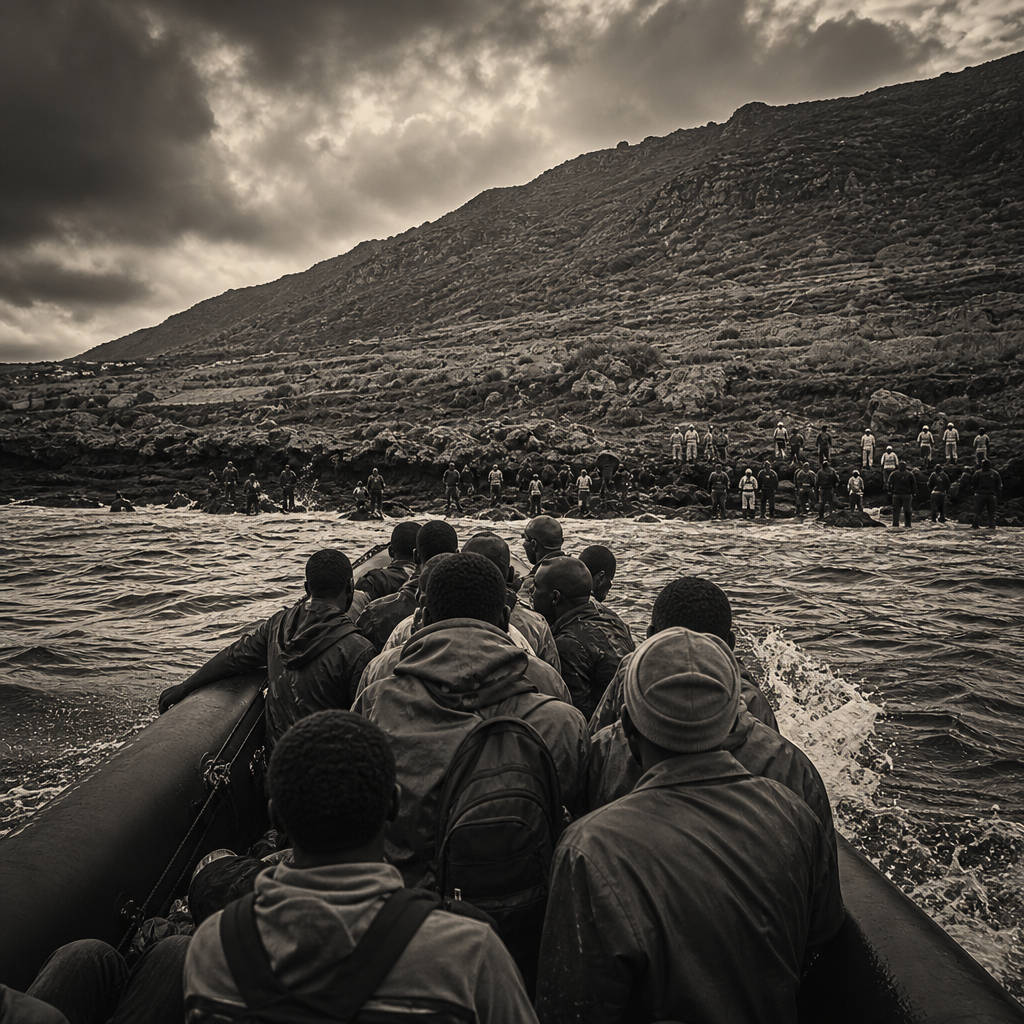
Spain's maritime rescue service recorded 1239 migrants landing on El Hierro in 24 hours. Three wooden boats delivered 604 people before dawn Tuesday, including 48 minors. Eight boats had already brought 815 arrivals the day before. The passengers originated in Senegal, Gambia, and Guinea-Conakry. Officials processed them at the port of La Restinga on an island home to only 12000 residents. This event unfolded five days before national elections. The scale demonstrates sovereign border failure.
Authorities framed the response as routine rescue operations under maritime conventions. They cited distress calls and the need to prevent drownings. No policy of interception or return appears in the record. The numbers instead show repeated acceptance of settlement.
Regional broadcasters reported the details without questioning the underlying tolerance. National leaders offered no immediate reversal of entry. The pattern treats the island as an open reception point rather than defended territory.
Such tolerance places the burden on a small population already stretched by prior waves. The facts establish sovereign border failure without mitigation from volume alone.
Every sovereign border failure dissolves the covenantal bond between a people and their soil. Natural law establishes that a historic people holds title to its territory as an extension of household order. God ordains nations with distinct lineages and lands. The duty of rulers is to guard that inheritance against dissolution.
Medieval Christendom enforced this principle through coastal watches and feudal levies. Spanish kingdoms repelled Moorish incursions for centuries to preserve Catholic soil and blood. The precedent shows that repeated landings without resistance erode the same bond now threatened in the Canaries.
Scripture records the command to maintain boundaries between peoples. The Tower of Babel stands as warning against forced mixing under centralized power. Augustinian order requires rulers to uphold the distinctions God placed in creation.
The opposing position claims rescue duties override territorial integrity. Yet maritime law does not mandate permanent admission or demographic alteration. The contradiction lies in converting temporary aid into irreversible settlement.
Spain's authorities allowing 1239 migrants onto El Hierro within 24 hours therefore constitutes sovereign border failure. This failure dissolves the covenantal bond between a people and their soil. Voters must now act through the ballot to restore enforcement.
Regional officials hold the immediate power to request naval interdiction. The national government must order returns to ports of origin. Both steps remain lawful under existing statutes.
Supranational pressure will resist. Temporary costs in logistics and diplomacy will arise. The alternative is continued erosion of the Spanish nation.
Households and parishes must first recover the moral perception that borders exist to protect lineage and inheritance. Only then can political institutions follow with concrete defense.
The timeline of Western Christendom records repeated recoveries after neglect. Spain possesses the same instruments of sovereignty if the people demand their use.