



Read Aloud · Premium
Listen to any dispatch in the Grok vocal voices. A benefit of membership.
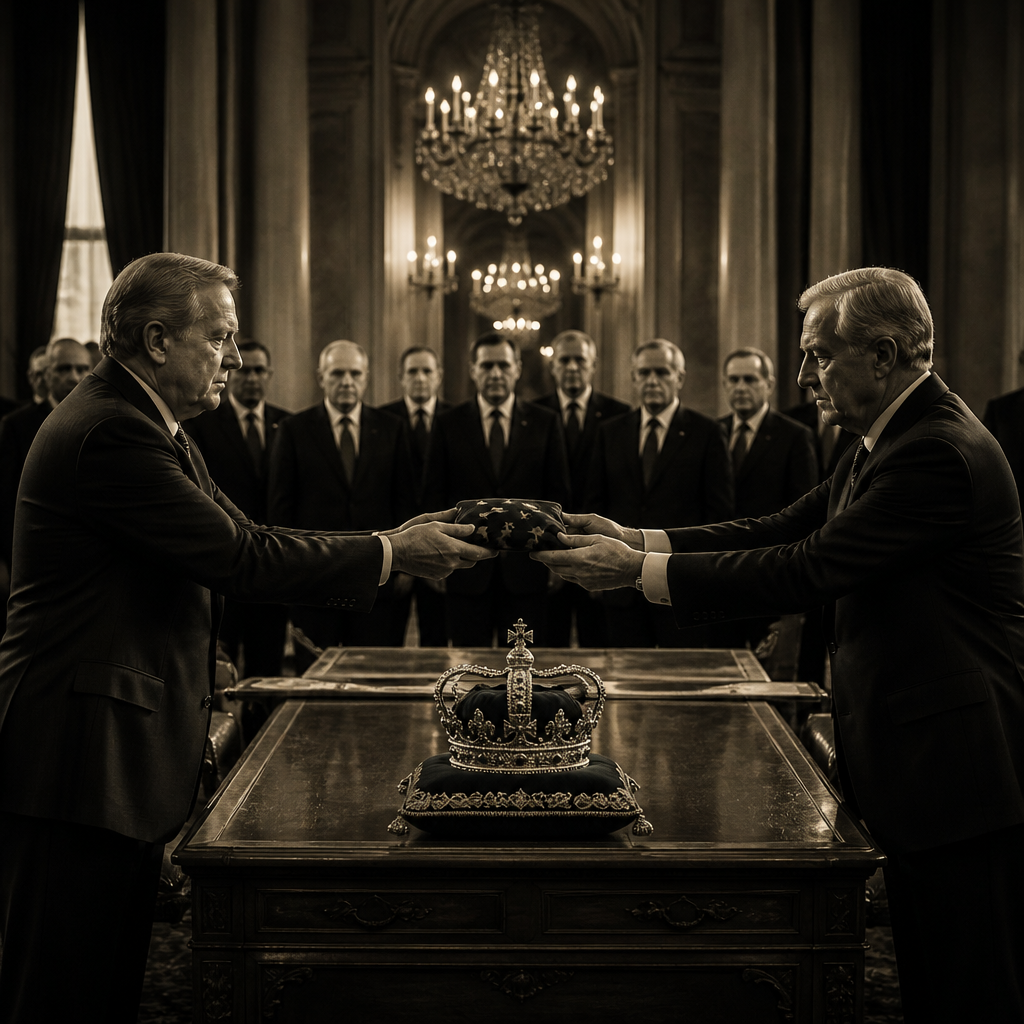
The United Kingdom has folded before Ursula von der Leyen. Rejoining the European Union and adopting the euro now stands as the declared destination. Government actions reveal a steady retreat from the referendum mandate that once promised restored borders and laws. Officials speak of necessary cooperation while every concession transfers decision making to foreign commissions. The pattern repeats across trade rules, regulatory alignment, and monetary policy. Each step narrows the space for independent national action. The endgame is no longer hidden.
Advocates inside Westminster present the move as pragmatic realism. They argue that isolation carries heavier costs than renewed membership. They claim economic security and diplomatic leverage require renewed partnership with Brussels. The argument rests on the premise that national independence must yield to material advantage. No defense of the historic people or their separate inheritance appears in the reasoning. The nation is treated as one administrative unit among many.
This surrender of national sovereignty follows directly from those premises. The claim that prosperity requires the loss of self rule contradicts the created order of distinct peoples. Nations arise under divine providence as moral communities bound to land and lineage. Rulers hold authority as stewards of that inheritance, not as managers who may dissolve it for convenience.
Natural law establishes the right of each historic people to govern itself through its own institutions. The patriarchal order extends from household to kingdom, preserving lineage, soil, and custom against external absorption. Supranational bodies dissolve these bonds by design. They replace covenantal loyalty with administrative decree and reduce citizens to economic units.
Christendom recognized this structure in its feudal and monarchical arrangements. Kings swore oaths to defend their realms against foreign overlords. Parliaments and estates checked royal power yet never surrendered the kingdom itself to an external council. The present arrangement inverts that inheritance by placing British policy under the review of unelected commissioners.
The opposing position collapses under its own terms. If economic gain justifies the surrender of national sovereignty, then no limit remains on further transfers of authority. Trade advantages can always be invoked to justify deeper integration. The argument therefore contains no principle that would halt the dissolution of the nation.
The UK government has chosen institutional alignment over the preservation of independence. That choice constitutes a breach of the duty owed to the historic British people. No documented emergency compels the step. No rival explanation survives scrutiny once the natural order of nations is acknowledged.
Reassertion of sovereignty begins with refusal. British patriots and parish leaders must withhold consent from further integration. They must form local assemblies that teach the duties of household and nation. Historic churches retain the authority to declare the moral order that political institutions have abandoned.
These bodies can press elected representatives through petition and electoral discipline. They can establish parallel networks of trade and education that do not depend on Brussels approval. The cost includes temporary friction with global institutions and the loss of elite favor. That cost is the necessary price of restoring moral perception.
Five years provides a realistic horizon for initial organization. Local efforts can accumulate into national pressure before irreversible monetary union occurs. The alternative is continued drift toward absorption.
The command against false witness binds every public statement. Leaders who present surrender of national sovereignty as mere cooperation violate that command. Citizens who accept the framing share in the deception. Restoration requires naming the act plainly and rejecting its consequences.
God established nations as moral realities, not administrative conveniences. The family sustains the nation through generations. Political authority exists to protect that continuity. When rulers dissolve the nation, they break the chain of stewardship entrusted to them.
The British people retain the capacity to reverse the present course. They must exercise that capacity through lawful institutions before the remaining instruments of independence are surrendered. The judgment rests on the facts already visible and the law written into the order of creation.